Carbonable…the Green WEB 3.0?
- Update of 05/07/2026: Carbonable is no longer showing any signs of life; the project is considered finished.
- The carbon credit market: obligations, quotas, and pitfalls.
- Carbonable aimed to finance selected environmental projects via blockchain.
- An example of Web3 in action, with the risks inherent in fintech companies.
IMPORTANT: update 05/07/2026 - Carbonable is no longer active
Carbonable has shown no signs of life for over a year. Due to market difficulties, the latest information from the founders at the beginning of 2025 indicated a shift in the project towards B2B. A new portal appeared, but there's nothing now. Similarly, connecting your wallet no longer provides access to your investment history. It is not for me to judge whether malicious activity is present, but I currently consider the project finished and my investments lost. This is the risk of Web3 and fintech companies.
This does not change my view on the interest and logic behind this type of project, which aims to offer a new way to invest. It's unfortunate that the founders are no longer communicating. Investing in a startup is always very risky, and it is normal that not all projects succeed. I was aware of the risks from the start, but not having clear information about the end of this venture is very disappointing. I am keeping the article online to illustrate an example of a Web3 project, even if it has failed (like many others); it remains interesting to discover and understand.
Click the image to enlarge.
Introduction
As a preface, this article is in no way investment advice. It is solely my personal opinion and a presentation of a project illustrating the use of WEB 3.0.
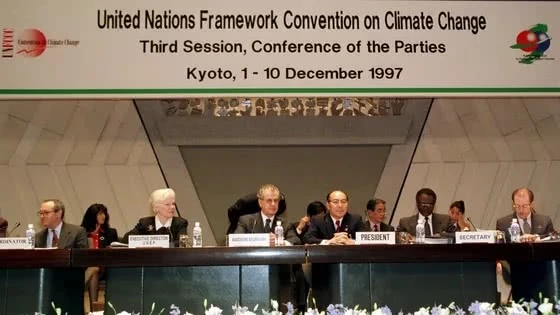
On December 11, 1997, the Kyoto Conference was held. For the first time, 191 countries agreed on common goals for reducing greenhouse gases. This led to the protocol of the same name.
Click the image to enlarge.
To achieve this, solutions were needed to track and enforce the commitments made at the conference. While we are generally all in agreement about saving the planet, we are much less united on how to do it. But there is one thing that everyone agrees on to be motivated: money.
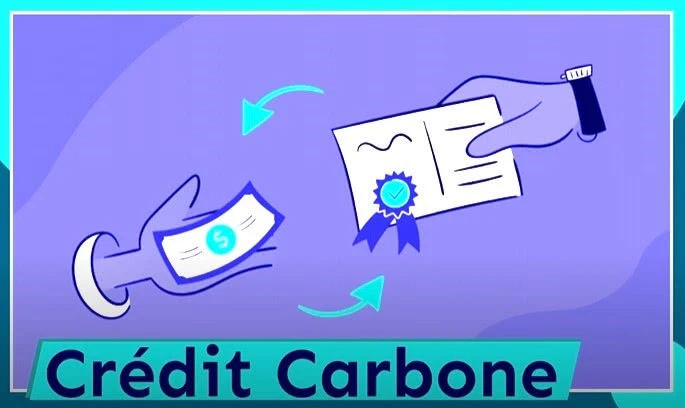
Therefore, carbon credits were born. On paper, it's a very good idea.
The signatories of the protocol committed their industries to reduce their CO2 emissions. What could be better than creating a market that encourages companies to rethink their processes to reduce their environmental footprint?
Even with an eco-friendly mindset, we are still often reluctant to get involved in green projects when there are subsidies at stake. Let's not be fooled; carbon credits partly serve to transform reforestation into a speculative asset.
Click the image to enlarge.
A complex implementation
In addition to the obligation for large companies to assess their CO2 production, there are quotas to meet. Once exceeded, the company in question must:
- from companies that are below their quota and wish to receive money in return.
- originating from projects with ecological goals.
However, there have been many failures in practice. Even today, the carbon credit market is poorly understood and very inaccessible. There have been enormous scandals and abuses.
Very quickly, bogus projects emerged, in which unscrupulous companies (and not necessarily the smallest ones...) invested, taking advantage of the recovered carbon credits to resell them or allow themselves to "increase their right to pollute."
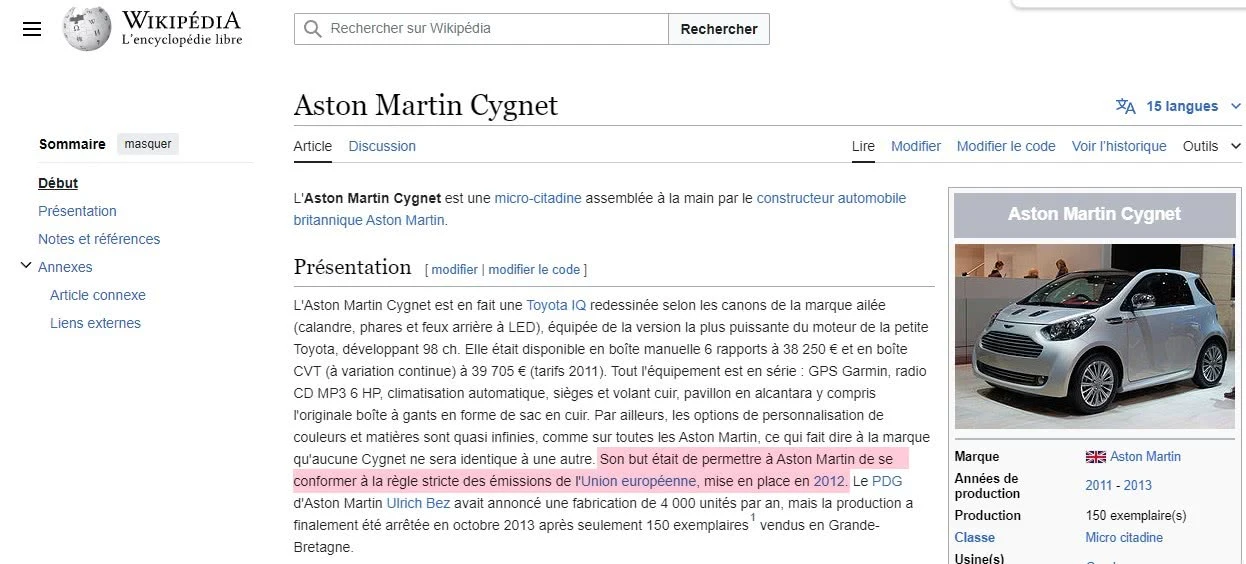
A lot of "greenwashing" appeared. There were many announcements, but very little concrete action in the end... and some originalities, such as a Toyota IQ that was disguised as an Aston Martin.
Click the image to enlarge.
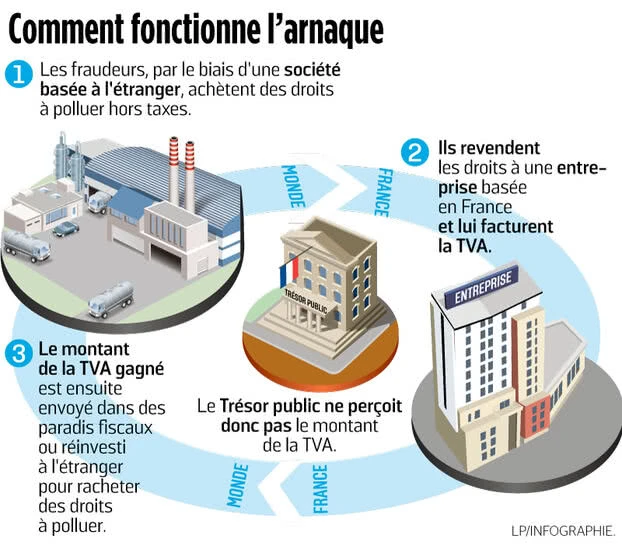
France experienced its own problems with VAT fraud on carbon quotas, which was described as "the scam of the century" and cost the French state millions of euros.
Click the image to enlarge.
Fortunately, over the years, monitoring has improved, and labels and certification bodies have helped to sort things out somewhat. But it remains an obscure market where stock exchanges and specialized trading zones coexist. For individuals, it is complicated to invest in this market, and the amounts required are often reserved for large buyers and companies.
However, it is a rapidly expanding market that, according to Bloomberg or McKinsey, will experience enormous growth in the coming years. There are also many difficulties for projects to secure funding, while companies are increasingly interested in finding ways to acquire carbon credits.
The Carbonable project
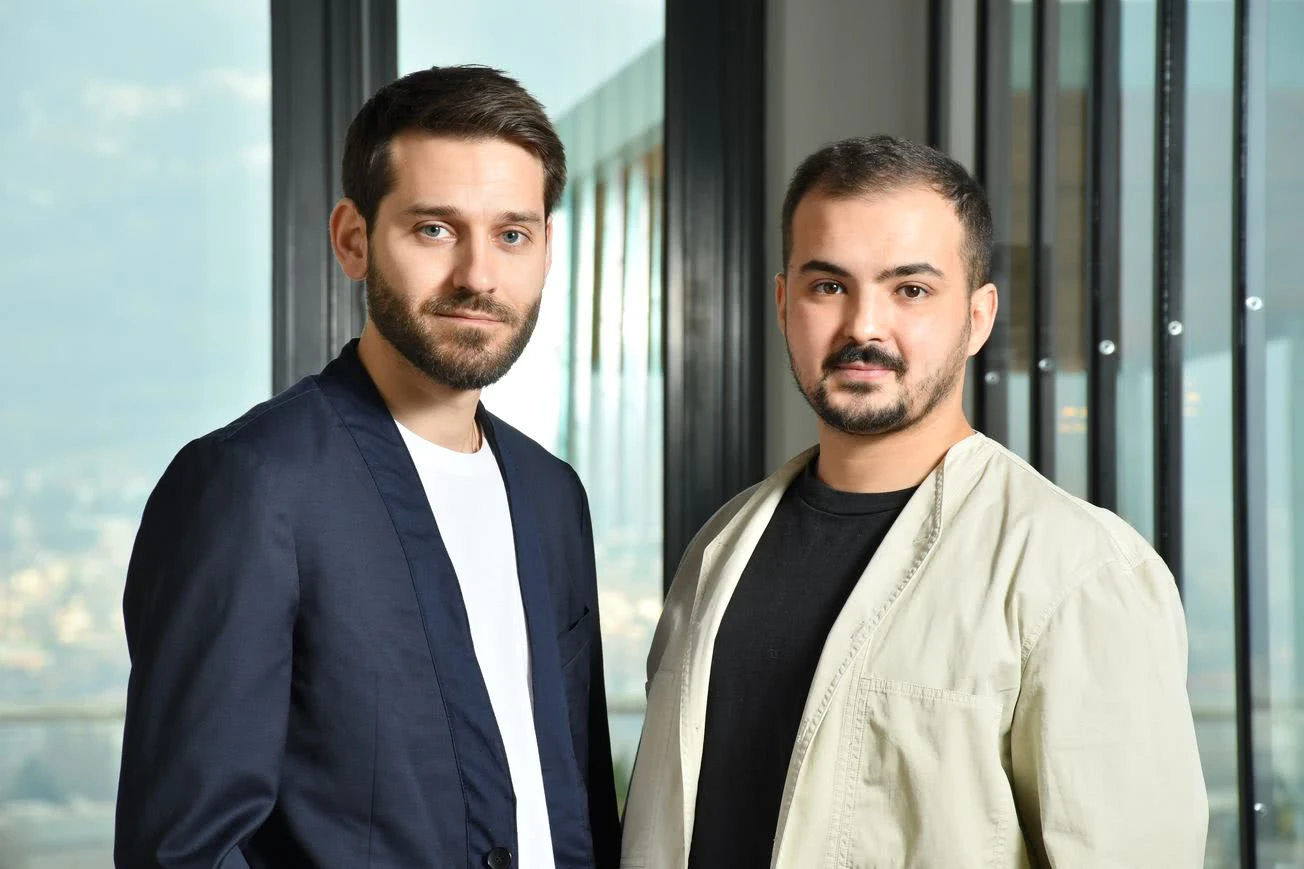
Based on these observations, Guillaume Leti and Ramzi Laieb founded the French startup Carbonable in 2021.
Click the image to enlarge.
The two founders have a background in engineering and already possess extensive experience in technology and marketing.
The idea is to focus on projects aimed at eliminating CO2 and that are eligible for carbon credits.
To protect nature, we haven't found anything better than nature itself. The projects aim to restore entire ecosystems, because planting trees alone is not enough. It requires a commitment over several years and working to develop a natural area, on land or at sea.
The regrowth of trees and plants, combined with the return of fauna and flora to large areas, allows for the creation of "CO2 absorbers" in open spaces.
Even though it remains approximate, it is possible to estimate the carbon credit impact of a project aimed at restoring an ecosystem
Click the image to enlarge.
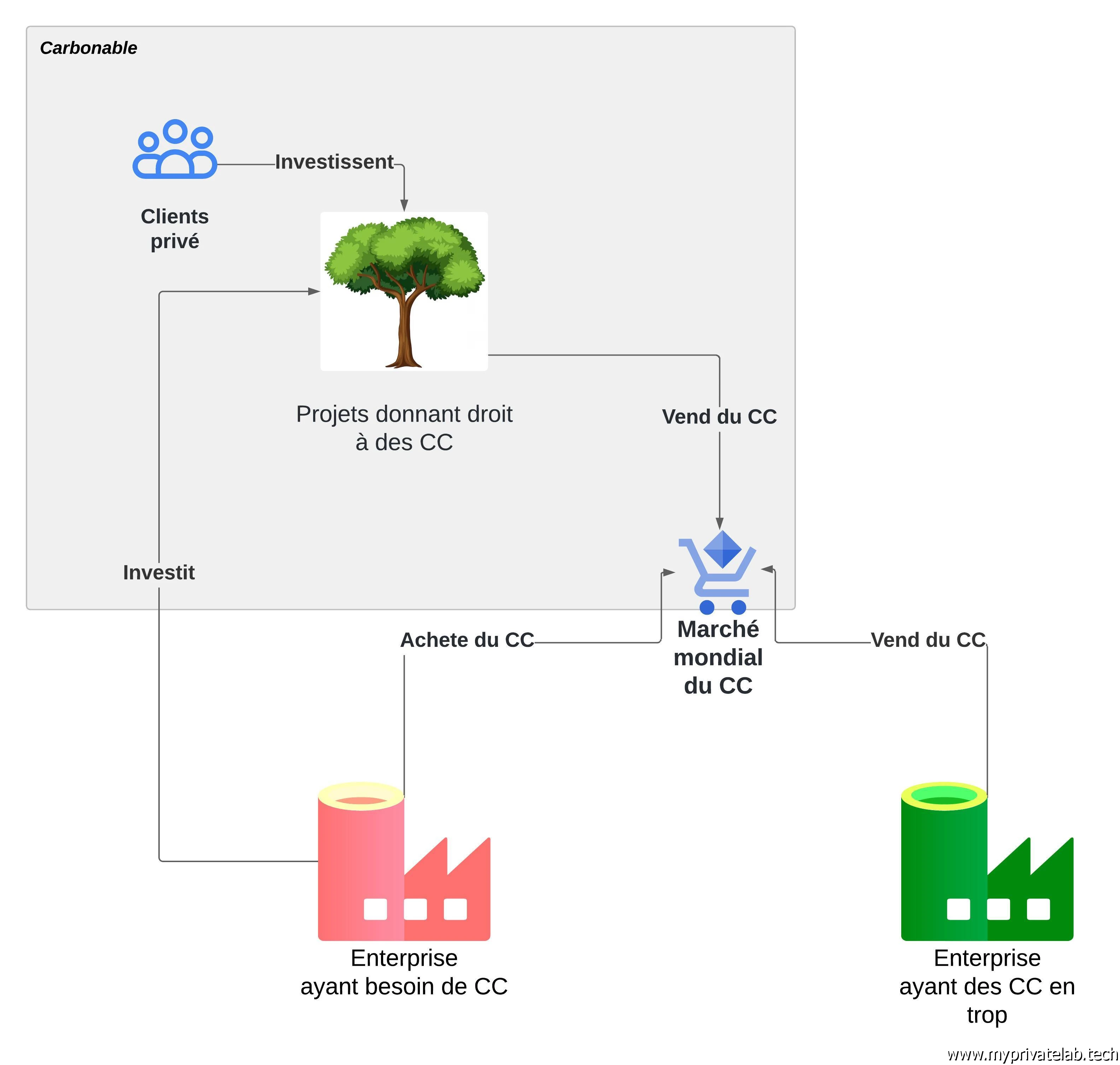
In short, Carbonable could be described as "ecological" crowdfunding. In reality, it is much more than that.
Principles of operation
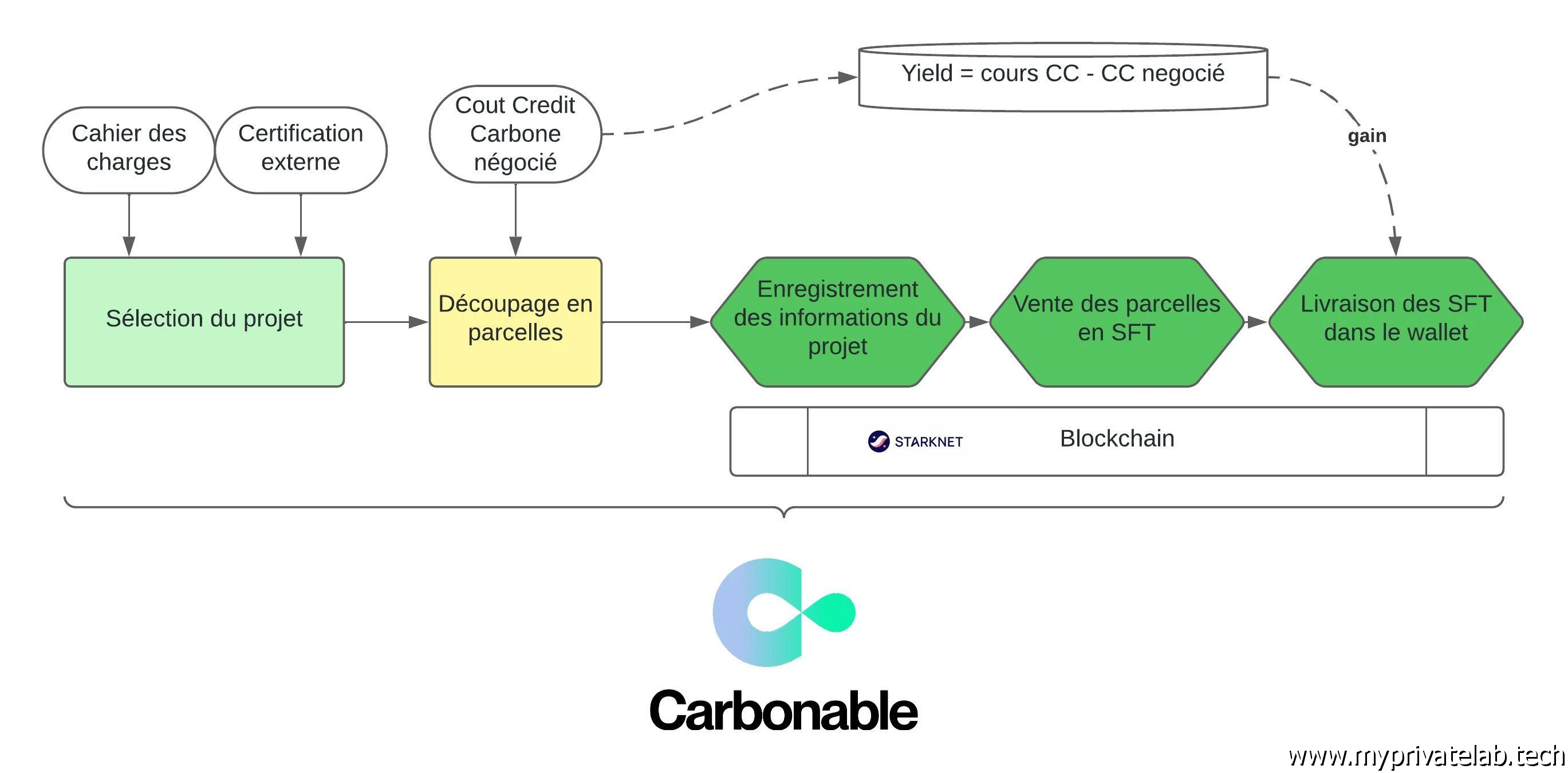
With the help of its partners, Carbonable will identify ecological projects eligible for carbon credits. They will carry out a rigorous selection process, conducting a comprehensive analysis of the objectives and applicants.
Many criteria are taken into account, including the demographic impact and the interest of populations near the projects.
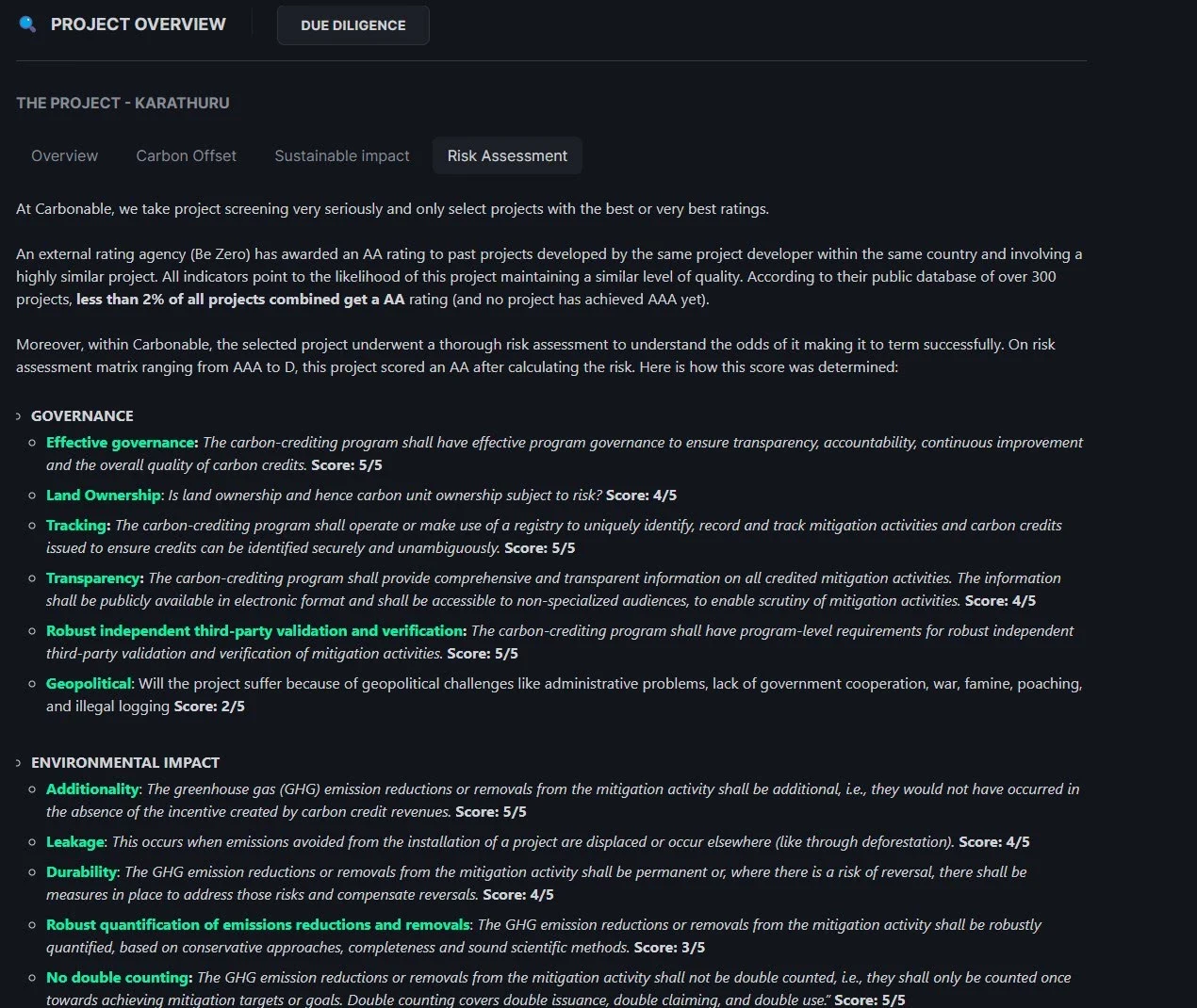
A risk assessment is carried out, and Carbonable will work with specialized organizations recognized as Verra or Wildsense, to obtain certifications that guarantee the seriousness of the selected projects.
Click the image to enlarge.
The background of the participants is analyzed to eliminate unreliable candidates.
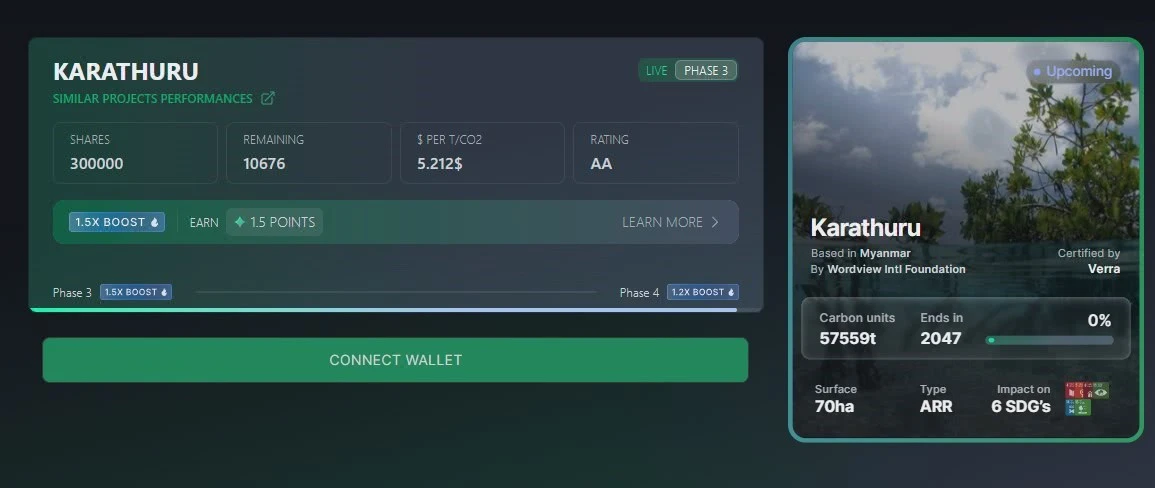
Once a project is chosen, it will be divided into parcels representing the area being treated.
These parcels will be associated with SFTs on the blockchain.
An "SFT" is a Semi-Fungible Token...less well known than its counterpart, the NFT. It has appeared more recently thanks to the ERC-3525 standard.
Each plot is associated with a capacity to produce carbon credits, the purchase cost of which is fixed at the start of the project (and therefore given in the characteristics of that project).
Click the image to enlarge.
These tokens share a common element; this is their fungible nature, and they group attributes that can be common to any Carbonable project. The rest is specific to the project to which they are associated and remains unique to each emission.
These SFTs will then be sold, or individuals can invest in the project through their acquisition. Entry prices are very low, often starting from $1.
The sale of all tokens will finance the project.
Over time, carbon credits may be transferred and recovered by Carbonable to be redistributed to token holders in proportion to their investment.
SFT owners can request to burn their rights to obtain a certificate justifying their participation in CO2 reduction, or they can sell this credit on the market and receive income.
Click the image to enlarge.
It is the second option that interests individuals. Carbonable offers to manage these sales for you and return your funds (after commission) in stablecoin.
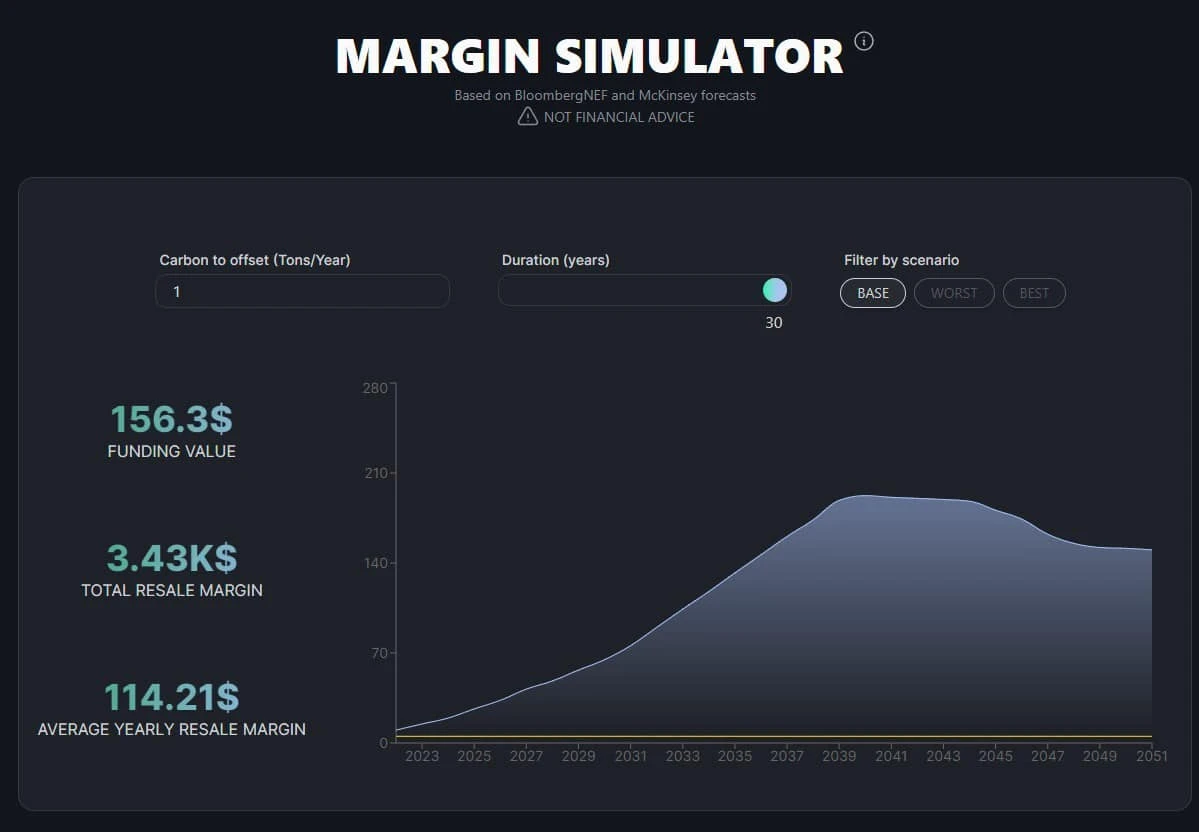
A calculator is available on the website to help you estimate your potential earnings based on your investment.
Click the image to enlarge.
Please note that these are projections, based on studies by major firms, but nothing is guaranteed
Returns necessarily depend on the carbon market; if it collapses, the carbon credits generated up to the number of tokens purchased will produce little or no interest.
It should also be noted that the time required for an ecosystem to regain its role as a CO2 absorber is not quick.
At the beginning of the project, returns are low or even zero, because carbon credits are issued based on the progress of the project. Initially, the plants and trees planted are not yet capable of eliminating CO2 (or equivalent). It logically takes a few years. This seems obvious when said like that, but it is not always a rule that is applied.
That's why returns increase over time if everything goes well.
This point is very important because the gradual issuance of carbon credits adds credibility to the project and its approach.
Other systems produce carbon credits from the start of the project, even though it may never be completed or yield results far below expectations.
Similarly, what happens to the project if a fire occurs? Carbonable has taken these issues into account and aims to reserve guaranteed funds for the project to cover at least the risks of incidents.
The fact that data is recorded on the blockchain to make transactions transparent, and that tracking of the project is freely accessible, represents a major change in this market, which is accustomed to opacity.
Unlike many carbon credits, whose origin is often unknown and for which it is impossible to judge the quality of the project, those related to Carbonable can be clearly identified and linked to their respective projects thanks to blockchain technology.
We can talk about a "qualitative" carbon credit that can justify a higher price due to its transparency and the guarantees associated with the project from which it originates.
From a marketing perspective, this is also very interesting for companies that want to communicate about their environmental policy. Thanks to Carbonable's traceability, it is much easier to assess their claims.
Carbonable has also partnered with data providers, including satellite providers, to monitor the progress of the project and record evidence of its advancement on the blockchain.
Of course, this is not perfect. There are still risks, particularly those related to the trust placed in Carbonable. We remain dependent on the startup, the projects it selects, and its long-term viability. A DAO is planned to attempt to decentralize governance somewhat, but this is not yet the case.
Carbonable has been certified as a DeepTech company by the public investment bank (BPI), which provides a degree of confidence and a source of funding.
The startup is also supported by Orange, La Poste, and Pierre Fabre, as well as other companies. I encourage you to do your own research.
Technologies
From the outset, Carbonable has been agnostic regarding the technical solution. The company's objective was to address the fundamental problem, not to create the best blockchain.
The founders have remained very pragmatic, focusing on the necessary services without aiming for a specific ecosystem. They started with Cosmos and eventually chose Starknet, an Ethereum L2. They are close to a former Ethereum developer (Abdelhamid Bakhta), who worked at Cosmos and is now heavily involved in Starknet.
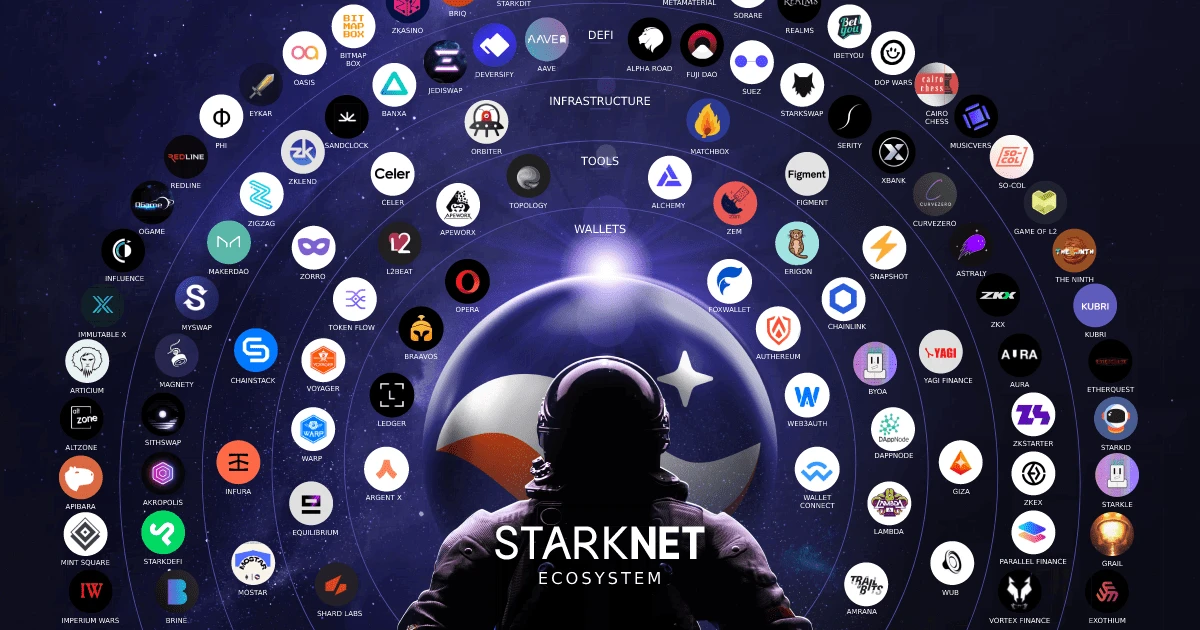
In fact, this is one of the most cited dapps within the Starknet ecosystem.
This choice is partly explained by their environment and the good compatibility of Carbonable's goals with the way Starknet operates.
Starknet is an Ethereum L2 solution, using proof of stake, and therefore much more energy-efficient than proof of work.
Click the image to enlarge.
As I explained in my article on WEB 3.0, an L2 layer allows you to improve the scalability and reduce the cost of a lower-level blockchain. More specifically, and unlike Gnosis used by realt, Starknet is a ZK-Rollup.
A rollup is a solution that executes transactions outside the main chain for batch recording on Ethereum. The primary chain stores proof of the correct execution of transactions from the secondary chain. This latter benefits from the security and robustness of the much more decentralized primary chain.
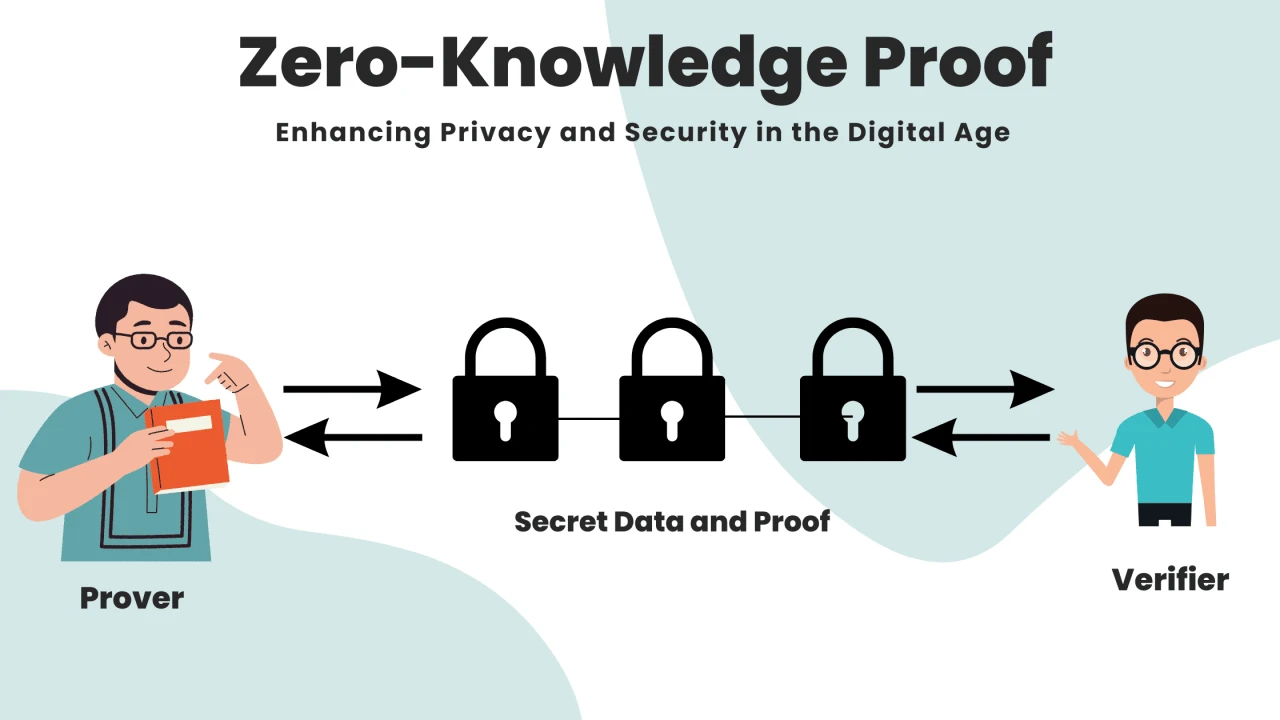
It is in the generation of proofs for transactions destined for the main chain that "ZK" comes into play, meaning "Zero-Knowledge", which refers to the use of zero-knowledge proofs.
This involves the use of cryptographic protocols that allow you to verify information without revealing its content. Based on mathematical principles expressed as early as 1989, it is only relatively recently, particularly through blockchains, that they have been able to be practically implemented.
This has the potential to be revolutionary and opens up many possibilities... imagine being able to prove that you are an adult without revealing your age, or having the guarantee of claiming ownership of an asset without having to reveal any information about your identity... and with the explosion of AI, being assured that you are interacting with a real person without them being forced to reveal any personal information.
I won't say more, as I am unable to. If this topic interests you, I encourage you to do your own research.
Click the image to enlarge.
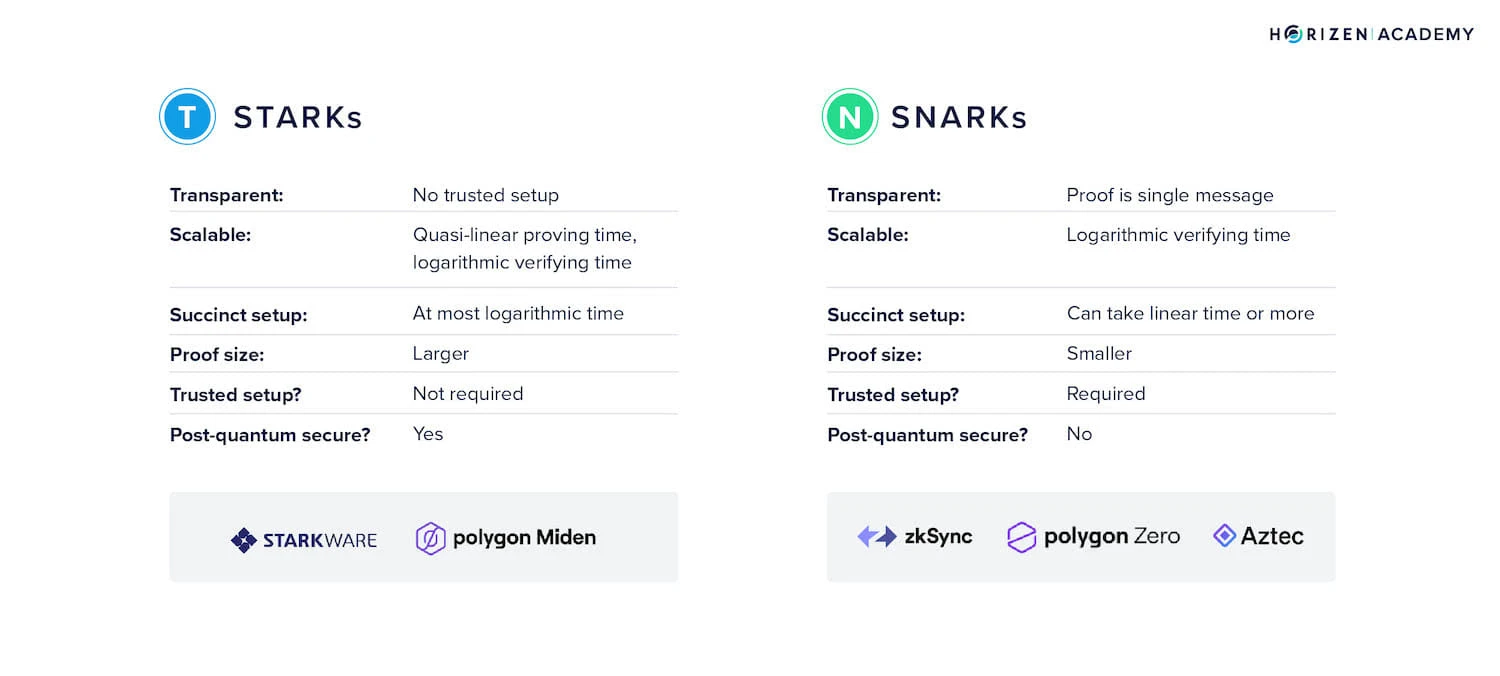
Regardless, Starknet is known for its use of these zero-knowledge proofs, especially since one of its founders, Eli Ben-Sasson, invented a way to generate them through his "STARK" solution, which stands for "Scalable Transparent ARguments of Knowledge".
Because his methodology was published in open source, "STARKs" have become a standard adopted by other blockchains.
Click the image to enlarge.
Another characteristic of Starknet is that it is not compatible with the Ethereum virtual machine. Considered inefficient and unsuitable for "ZK" applications, Starknet chose to create its own VM, even going so far as to design a programming language in place of Solidity: CAIRO
This incompatibility with the Ethereum world makes it more complex to onboard new applications. Smart contracts must be rewritten in CAIRO, but this also allows for a more optimized and efficient network that takes into account the specific constraints of "ZK".
Starknet is a proven and recognized solution. It has taken specific directions, making it unique among the many L2 solutions currently available.
If you want to learn more about this blockchain, feel free to read the CoinAcadmy article on the subject.
Conclusion
We must not be naive; ecology will only succeed if it generates money. This is not ideological; it's a fact. I cannot judge whether this is good or bad, but in a capitalist world, regardless of whether you agree with these principles or not, the economy ultimately drives things.
So, why not? The stakes are so important that it doesn't matter if the motivation is primarily financial before being ecological.
As long as the situation improves, it would be a shame to miss out on investment opportunities and the restoration of a natural ecosystem, all from your computer.
The carbon credit market is experiencing rapid growth. Regulations are only becoming stricter, and companies will increasingly have to deal with CO2 emission constraints (or equivalent).
However, for an individual, it is not easy to invest directly in this economy.
Carbonable is a WEB 3.0 approach that starts from a concrete problem and provides a solution through the use of blockchain and the tokenization of real assets. This is further proof that WEB 3.0 can demonstrate its value in practice. Blockchain, combined with advanced cryptographic mechanisms, is not just for cryptocurrency. An NFT (or SFT) is not just an image.
As with realt, technology makes it possible to access a much wider market.
Other blockchain projects exist related to carbon credits, often aiming to tokenize them directly. While this may facilitate access, we are unaware of their origin and cannot accurately measure their effectiveness.
By tokenizing land parcels directly as SFTs (Single Fungible Tokens), and then capitalizing on the carbon credits generated, it allows for investment further upstream and provides transparency that affects the resale price of the associated carbon credit.
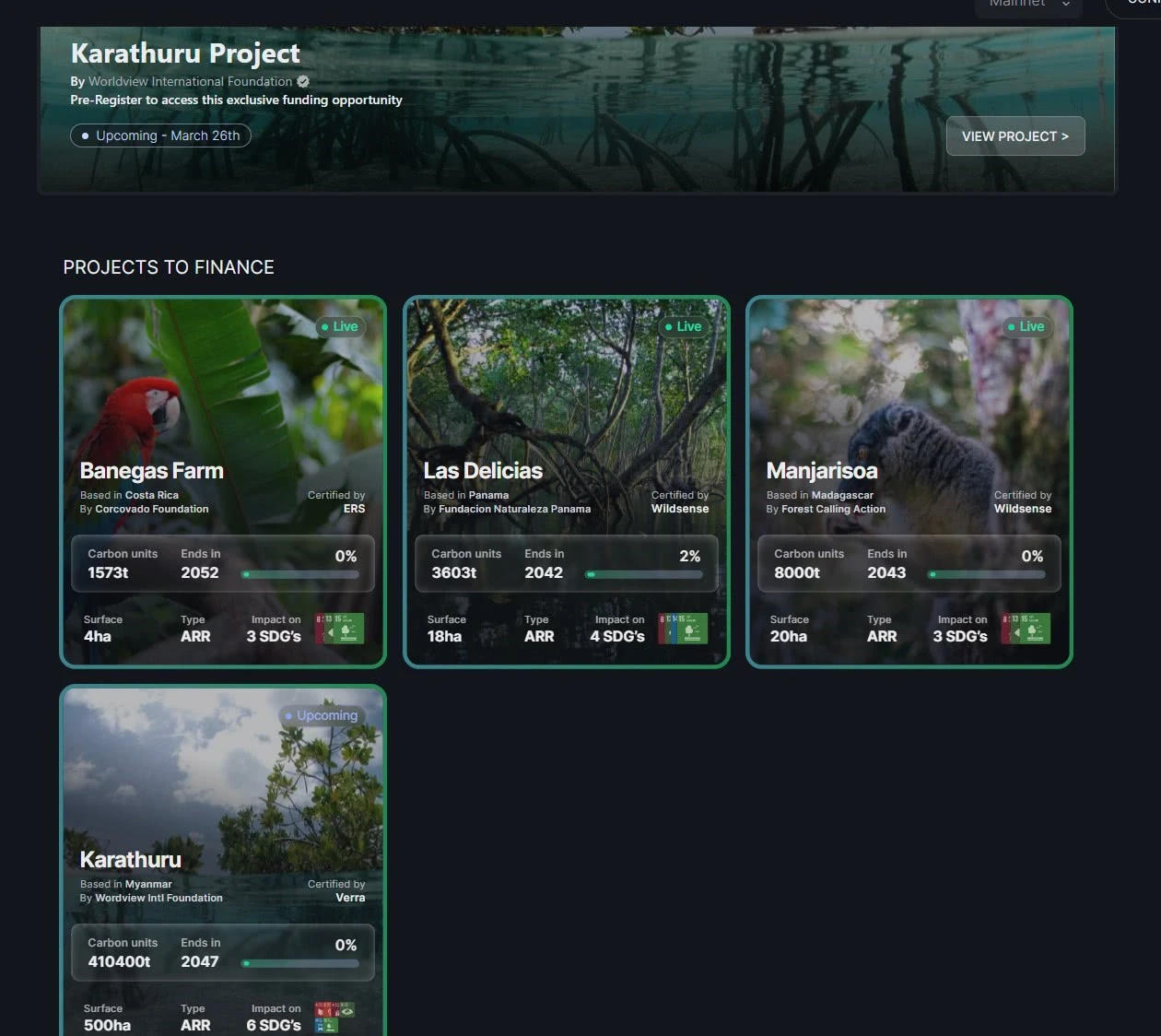
Carbonable remains a young and dynamic startup, but is still far from being established for the long term. Nevertheless, we already note three active projects and one in the process of being launched at the time of writing this article. The team seems serious, and the project's viability has been demonstrated... it remains to be seen how things will evolve.
Click the image to enlarge.
Personally, I have decided to try it out. I see this as a long-term investment, which is certainly risky, but also very promising. Feel free to explore the topic further and visit the Carbonable website