Bitcoin part 2: digital scarcity
- The double-spending problem and code governance.
- How transactions work, relative anonymity, and wallets.
- Bitcoin's technical constraints.
- Introduction to second-layer solutions like Lightning.
Introduction
The previous article served as an introduction to my presentation of the Bitcoin ecosystem. It aimed to focus on the consensus and Proof Of Work (PoW) aspects.
It allowed me to highlight one of Bitcoin's earliest revolutions: providing a solution to the Byzantine generals problem through Nakamoto consensus.
Feel free to read the article; it will be helpful for understanding what follows.
I want to point out that this remains a simplified version of how Bitcoin works. It is quite possible that some of my explanations are incomplete or somewhat shortened. I apologize in advance to the Bitcoin purists. I am still an amateur on this subject and only aim to introduce you to the latest Bitcoin technologies.
Bitcoin, by intelligently combining blockchain technology and PoW, has managed to enable the implementation of a network, said to be decentralized, so that it no longer depends on a trusted third party to perform transactions.
The first use case for this capability is to serve as a basis for the creation and circulation of the digital currency BTC (do not confuse Bitcoin and bitcoin; once again, all of this is explained in my previous article).
Thanks to the Bitcoin network, it becomes possible to exchange value through a token (BTC) in a completely digital way, without any need for a central entity.
Click the image to enlarge.
The double-spending problem
But why is this entity necessary in a classic system? It simply guarantees the uniqueness of transactions by avoiding so-called double-spending cases.
This is a particularly significant issue with digital assets. In fact, by definition, it is much easier to duplicate a digital object than a physical one. When you give someone a banknote, it becomes impossible for you to spend that same banknote on something else. The transaction is complete, and the banknote is no longer your property.
But once that banknote is represented as a sequence of 1s and 0s, what protection can prevent me from producing as many as I wish?
The need for centralization
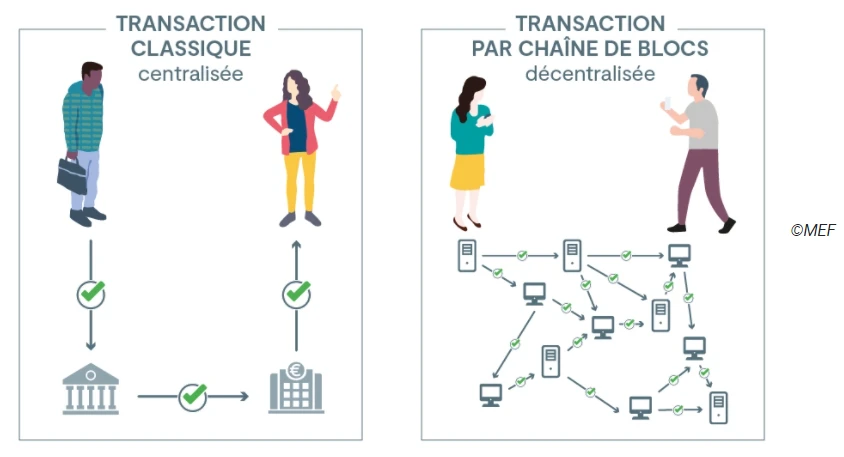
For quite some time now, we have been accustomed to spending money digitally: credit card payments, PayPal, neobanks, online transfers... all these payment methods depend on a centralized organization to ensure that the transaction is processed only once and that withdrawals on one side are credited on the other. These organizations maintain a single register of transactions that they may share within a strict framework controlled by a central authority.
It is never possible to send value through a digital channel without depending on a third party.
This is not necessarily a problem in itself, but as soon as you do not have the ability to complete a transaction using your own means, you must comply with the rules imposed by the third party that you have chosen to send or receive value.That third party may decide whether or not to execute your transaction, to freeze your funds, or to request justifications for your transaction... things that you may not appreciate. Moreover, this can lead to abuses when certain types of regimes become established in a state.
The Bitcoin alternative
Since Bitcoin offers a consensus solution that allows a large number of nodes (servers/nodes) to maintain a register of transactions without dependencies other than the computer code on which the protocol is based, it is possible to guarantee the uniqueness of transactions, making any double spending impossible.
Click the image to enlarge.
That's how, as of the time this article was written, you can send and receive BTC without anyone being able to dispute the validity of your transactions once they are recorded in the blockchain. This also means that you can only blame yourself in case of operational errors...
This touches on the second technological innovation of Bitcoin: digital scarcity. Only one version of this shared ledger between nodes is considered valid at each execution of the consensus mechanism. All transactions included in it guarantee that each exchange of value can only occur once, with excellent traceability.
This is also why the issuance of Bitcoin is limited to 21 million. Despite being a digital currency, it is now impossible to "print" more Bitcoins than the protocol allows.
Code governance
Some might now argue that while the Bitcoin protocol, through its consensus mechanism, allows for the hosting of a transaction ledger without the risk of double-spending, and does so in a decentralized manner, it remains computer code that can be modified. Therefore, you can change the rules of the game with just a few lines of programming language.
That is absolutely true. Today, anyone with the necessary knowledge can access the Bitcoin code (and everything related to it), modify it, and change its operating mechanisms. However, this code only has value if it is executed by a majority of nodes on the network.
While this was easier at the beginning of the project, with a ridiculous number of nodes, where only Satoshi Nakamoto and his friends were running the original code, it has become more complicated today.
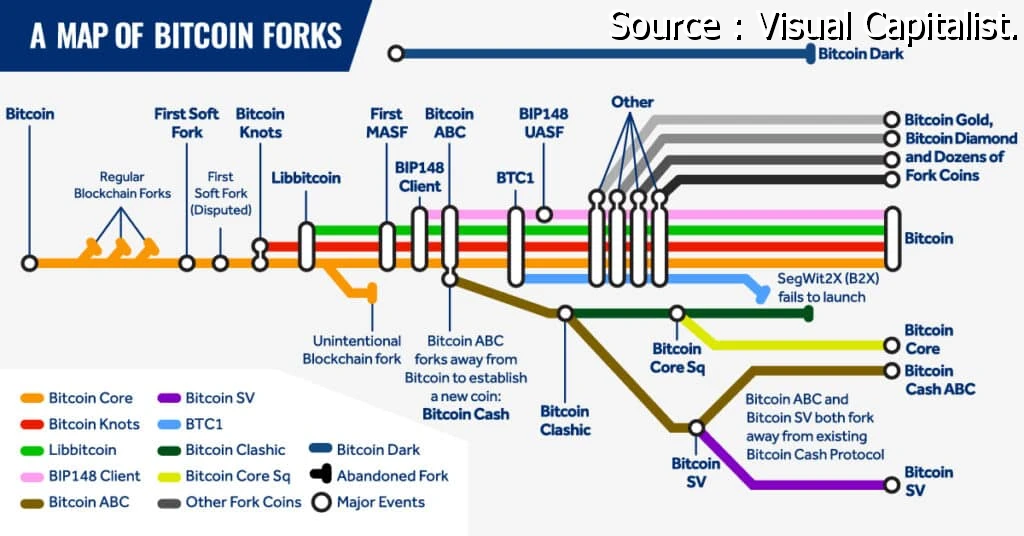
Furthermore, throughout Bitcoin's history, its code has been copied and modified several times to create other networks (a fork), such as Bitcoin Cash, Litecoin, Bitcoin SV... but none have managed to gain as much traction as Bitcoin. As I explained in my previous article, running a network based on blockchain technology with a small number of nodes makes very little sense.
Click the image to enlarge.
The software development of Bitcoin is very similar to the development of major open-source software, such as Linux for example.
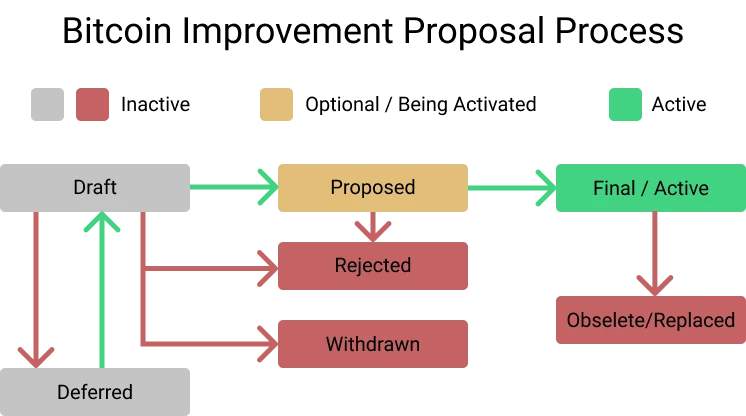
The evolution of the Bitcoin protocol follows a very structured process. New features or modifications are proposed in the form of BIPs (Bitcoin Improvement Proposals).
Click the image to enlarge.
These changes are first discussed publicly on forums and mailing lists.
Cryptography experts and developers from the community analyze the associated impacts.
Then, when a BIP is accepted, it is evaluated in detail on test networks, sometimes for a very long time.
And finally, only if no problems are detected, the change goes into production according to two possible forms:
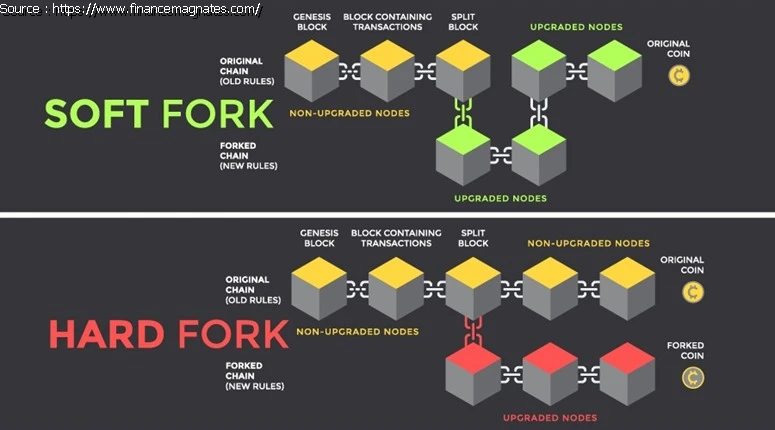
- Soft Fork: the update remains compatible with older versions of the code.Nodes that accept the new code apply the new rules, while those that do not apply it continue to function, but indirectly adhere to the new rules. There is no separation of the blockchain, and consensus is maintained.
- Hard Fork: this is a major protocol update that breaks backward compatibility with older versions. All nodes that do not implement the hard fork will run a blockchain that differs from the new blockchain composed of nodes that have applied the update. If all nodes do not apply the hard fork, then we end up with two blockchains, and by extension, two digital currencies, since they are associated with the network on which they operate. Ultimately, it comes down to numbers; if some refuse to implement the hard fork, they become members of a new network that competes with Bitcoin, and the market ultimately decides.
Click the image to enlarge.
Bitcoin Core
The default implementation of the Bitcoin protocol is Bitcoin Core. It is currently the official client for the protocol. Any developer can:
- download the source code of Bitcoin Core (GitHub).
- propose improvements in the form of Pull Requests (PRs).
- report bugs or vulnerabilities.
- discuss and propose improvements on forums such as BitcoinTalk, the bitcoin-dev mailing list, or on GitHub.
However, proposing a change does not mean that it will be accepted immediately!
Only the maintainers of the Bitcoin Core repository, experienced developers with specific access, can validate and merge updates into the code.
But this does not mean that they can do whatever they want whenever they please, or meet among themselves and decide to change the code. As explained, everything is public, and the Bitcoin community is such that today, the steps for changes in Bitcoin are very long and involve many debates before being actually implemented.
Not to mention that modifying the code of Bitcoin Core does not mean that the code of Bitcoin Core will be updated on the nodes of the network. For this to happen, the code must be adopted by the nodes of the network and the miners.
It is important to note that it is also possible to propose an alternative implementation of the Bitcoin protocol other than Bitcoin Core. As long as it adheres to the rules of the protocol, nothing would prevent it from running on nodes in the network and participating in consensus. In reality, Bitcoin Core has a large majority.
In other words, if everyone can participate, no one can decide alone... or they launch their competitor to Bitcoin, hoping it will be more successful. In reality, even though some forks have experienced limited adoption, particularly during the block war (some wanted to increase the size of blocks to increase the number of transactions at the risk of requiring more powerful nodes, while others wanted to keep the original size to ensure the stability of the blockchain: the conservatives won), Bitcoin is still the reference today.
A rigid protocol
It is important to understand that Bitcoin is a protocol considered "ossified" which prioritizes long-term development over innovation. The network has become so widespread, giving rise to a new asset class in itself, that the evolution of Bitcoin occurs at a slow pace with very thorough studies for each proposed change. Let me tell you, the limit of 21 million bitcoins is not likely to be lifted anytime soon. It is now clearly simpler to change the rules of a fiat currency (euro, dollar...) by printing banknotes if deemed necessary by central banks, than to modify the rules of the Bitcoin protocol.
How transactions work
Anonymity
Let's also briefly discuss the issue of the supposed anonymity offered by the Bitcoin network, as we are touching on some controversial topics.
To understand this, we need to focus on the principle of exchanging bitcoins on the Bitcoin network. (Just a reminder that 'b' and 'B' are not the same).
Access to the Bitcoin network itself is public. Anyone can anonymously view the data contained within it. However, if you want to interact with the network and request a transaction, especially a BTC transaction, you will need to authenticate in some way.
Private key and wallet
This authentication does not involve a traditional login/password system, but rather the use of a private key. This key is often generated automatically when you use the famous wallet for the first time.
A wallet is a software application that interfaces with the Bitcoin network. It uses a private key for this purpose, and this key is unique and confidential. This is obviously an extremely sensitive piece of information that must never be disclosed.
This private key can be represented by the well-known seedphrase that you are often given when you initialize a wallet for the first time. This seedphrase, which consists of at least 12 words, is only a way to reconstruct the private key if it were to be lost (e.g., due to the destruction of the wallet).
In fact, this seedphrase is the only thing you must not lose in order to authenticate yourself on the Bitcoin network and process BTC transactions.
Starting from this seedphrase, any BTC wallet will be able to reconstruct the associated private key to interact with the network...and retrieve your funds.
(This means that anyone who knows your seedphrase can access your funds...and you won't be able to call the bank if this happens).There are two types of wallets:
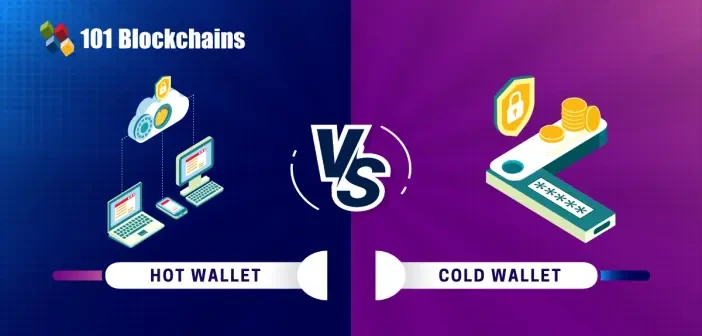
- Hot Wallet: This is a software-based wallet that can be installed on your computer or smartphone. The private key it uses is stored where it is installed, and therefore most often on a device that is likely to be connected to the internet. This is a simple and quick solution to implement, but it makes the private key vulnerable to hacking of the device on which the hot wallet is deployed. Therefore, it is recommended to reserve this type of wallet for small transactions or only for temporarily storing funds.
- Cold Wallet: This is a hardware wallet. It is a specific piece of equipment designed to host and secure the private key. Its interaction with the Bitcoin network requires the user to perform a mechanical action to validate a transaction. Therefore, a cold wallet is recommended for long-term storage of funds. Today, it is still considered the safest way to protect your private key.
Click the image to enlarge.
It is important to note that wallets integrated into exchange platforms such as Binance or Coinbase are so-called non-custodial wallets, meaning you do not own the private key associated with them. You are returning to a centralized system where you no longer directly manage your funds but trust a third party. As the saying goes in crypto: Not your Key, Not your Coin. That is why exchanges should be prioritized for temporary actions, conversions, and deposits/withdrawals, but not for storing your funds.
This private key also corresponds to a public address, which is used to allow you to receive BTC. It also identifies all the transactions you might make. And that's where we break the notion of anonymity and move towards pseudonymity.
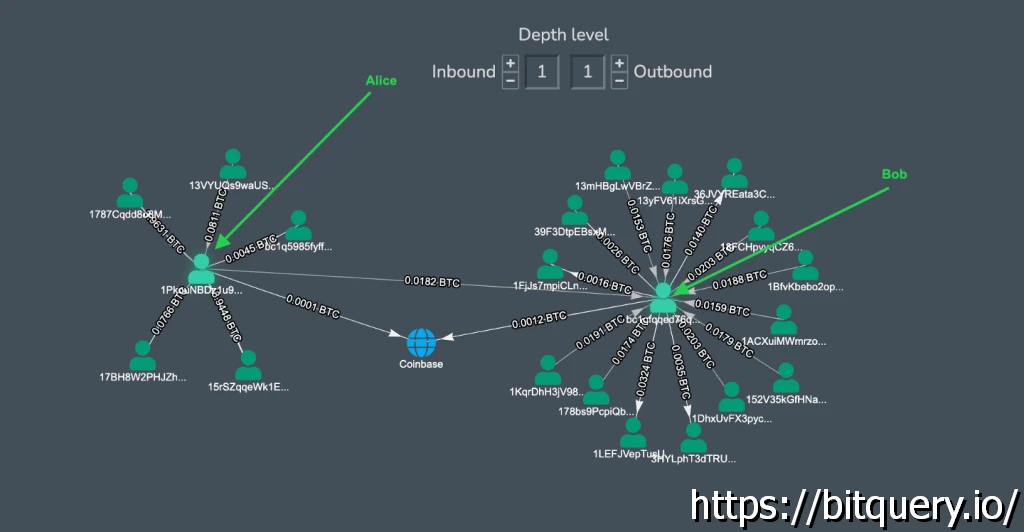
Your public key does not contain any of your personal information, such as your name. But without knowing who you are, it already allows tracking of your activity on the network...and that alone is a deterrent for many actors who want to be as discreet as possible.
Click the image to enlarge.
Remember that in this age of algorithms, there are ways to identify your activities without needing to know any personal information about you.
The amount of BTC being handled, the times at which transactions are made, the interactions between wallets... all of this is already much more traceable and visible than a simple banknote passed from hand to hand...or from briefcase to briefcase. Today, there are companies specializing in observing blockchain activity and identifying transactions. They are often consulted in cases of suspected money laundering or ransomware attacks...and they are becoming increasingly effective.

Click the image to enlarge.
Interacting with Bitcoin
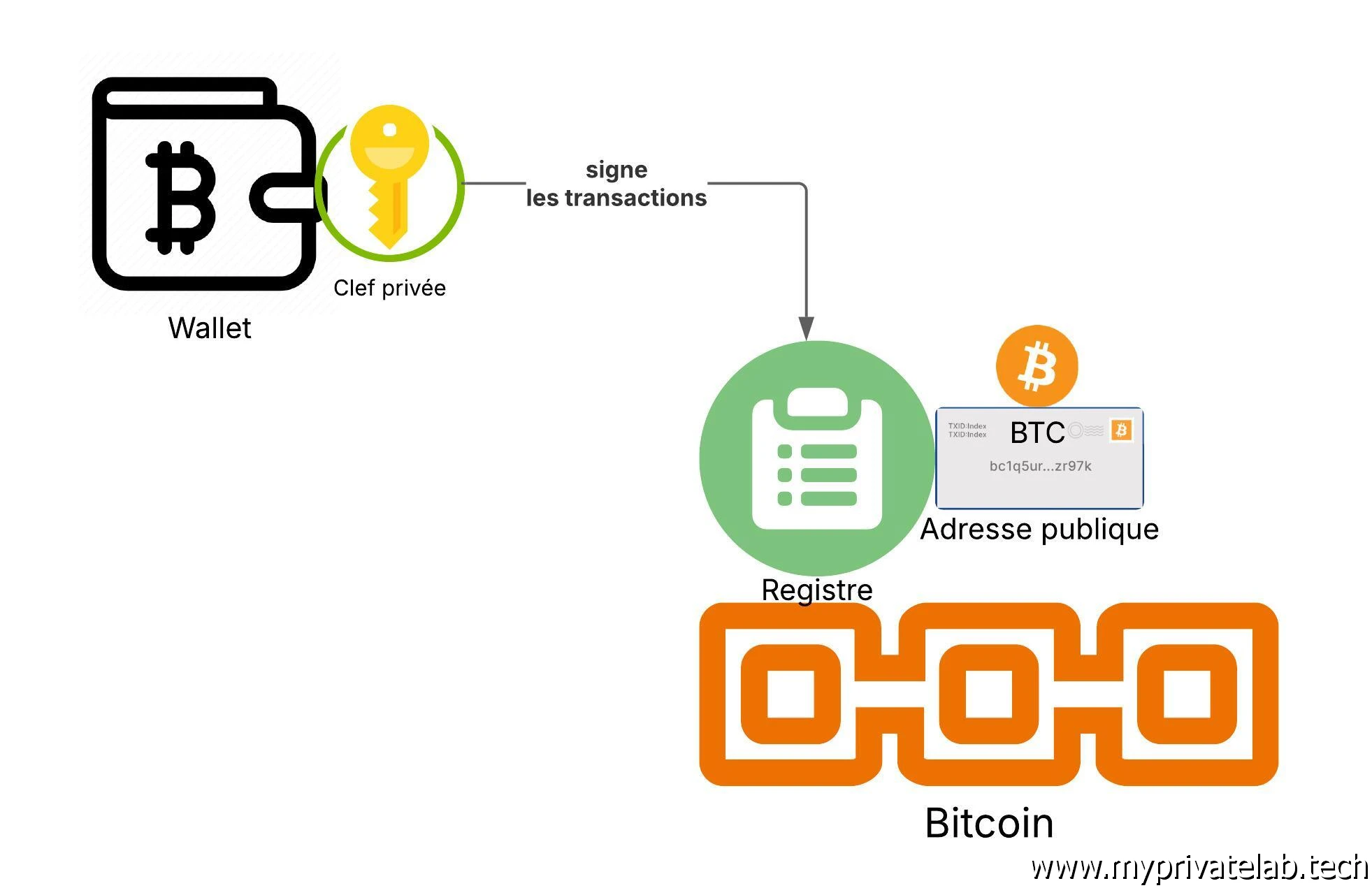
When your wallet interacts with the blockchain, it presents your private key, which allows you to prove ownership of the transactions associated with your public address and to generate other transactions related to the BTC funds associated with it.
It is important to understand: your wallet does not hold any BTC. All BTC are on the blockchain, hosted/circulating on the Bitcoin network and governed by the Bitcoin protocol. Your wallet only demonstrates, through your private key, your ability to spend the BTC associated with your public account.
Essentially, everyone can see your BTC (but not know that it's you), but only you, with your private key (the key itself), are able to spend them.
When you want to send BTC, you sign a transaction with your private key, which authorizes the BTC associated with your account to be "moved" to another account corresponding to the public address to which you want to send funds.
Click the image to enlarge.
The mempool
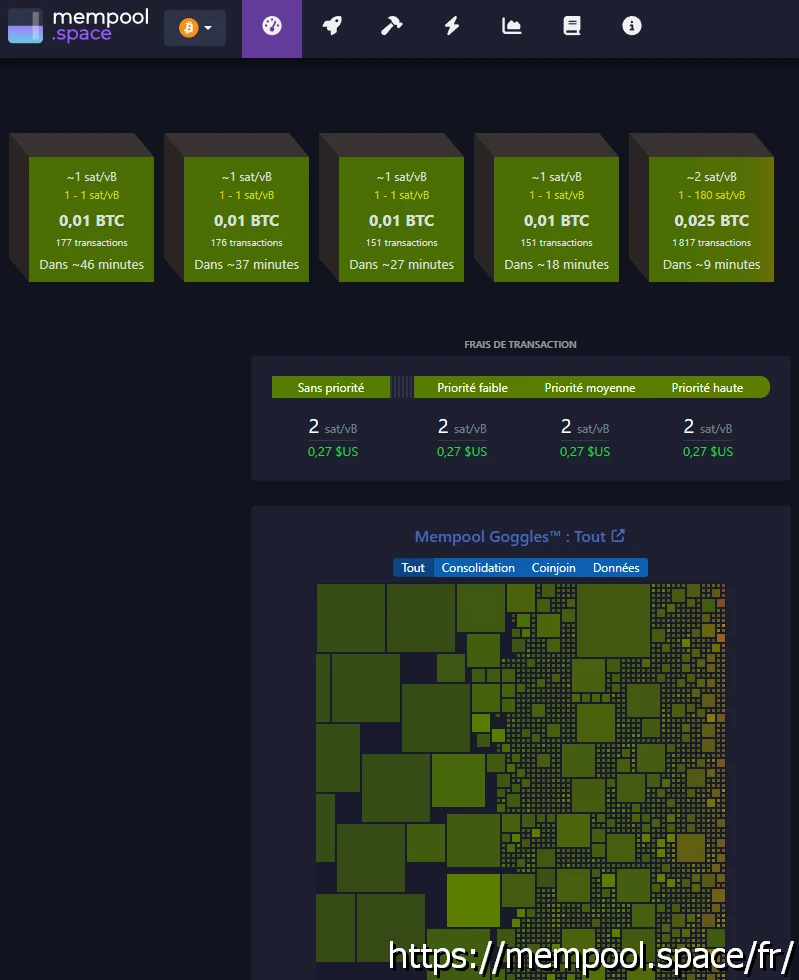
Your transaction is placed in a queue called the mempool. The mempool is a visible space for all network participants and represents the set of pending transactions.
When a miner wins the calculation, they select transactions from this mempool to process and record them in a new block. The selection of your transaction will depend on the associated fees (miners prioritize transactions with high fees) and the state of the network. If the network is under heavy load, it's possible that your transaction won't be processed immediately... (or you might have to pay higher fees).
This is one of the drawbacks of the Bitcoin network; its transaction capacity is limited to between 3 and 7 transactions per second (the Visa network can handle up to 65,000 transactions per second), but this is the price of decentralization. It always takes longer to reach agreement among thousands of nodes around the world than it does with a few servers in a few data centers.
Click the image to enlarge.
Transaction registration
Once your transaction is recorded on the blockchain, you have to wait for the next blocks to be added so that it is "permanently recorded." I won't go into detail, but it is generally considered that you need to wait 6 blocks after your transaction is recorded before it becomes immutable, which is approximately 1 hour. This is related to the probability that an attacker can reorganize the chain and replace the block containing your transaction, which decreases as more blocks are added to the chain.
And there you have it; you've sent value across a network without having to justify yourself, without having to rely on a centralized organization, and without geographical restrictions. You are solely in control of your funds, and while not anonymous, you can maintain discretion regarding the use of your BTC. No one is able to contradict your transaction.
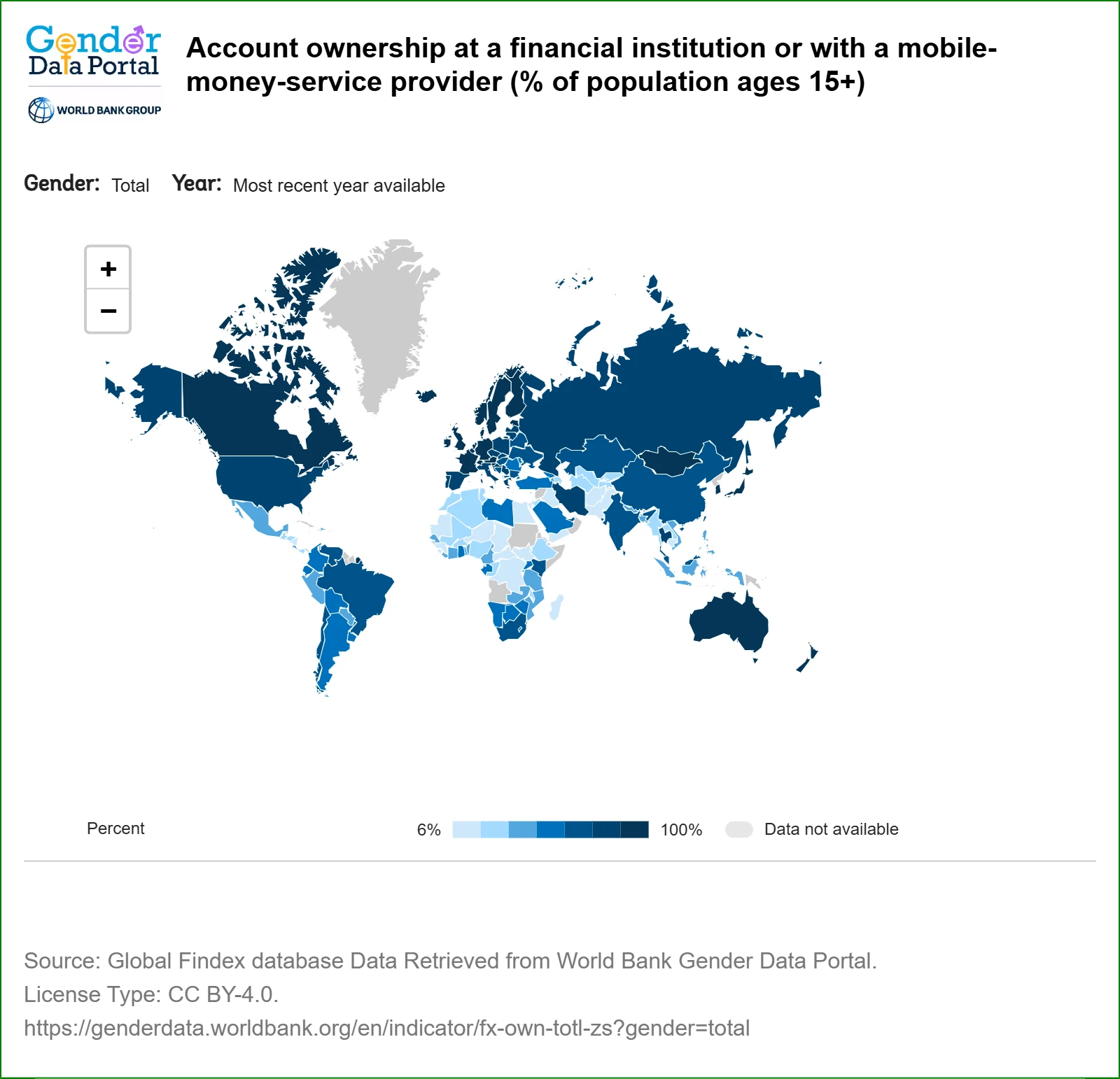
In a country like France, where banking services are readily available and accessible, there are few restrictions on accessing your funds as you see fit (although this point could be debated). However, on a global scale, this represents a level of financial freedom that is not available to many. In this context, Bitcoin offers a genuine solution for financial protection and goes far beyond being simply a speculative asset.
Click the image to enlarge.
Bitcoin's technical constraints
However, the limitation of Bitcoin lies in its performance. As its adoption grows, the risk of saturation of its transaction capacity increases. If, tomorrow, every human on Earth adopted BTC as currency, they would have to wait several years for their transactions to be validated.
For now, this problem remains marginal. Although the network has experienced congestion on several occasions, its usage is still within the limits of its capabilities.
While the protocol's structure contributes to the robustness and reliability of the network, it also hinders adoption because it is not easy to change the code to make the network faster.
That's why some are betting on Layer 2 (L2) networks. I explain the concept of layers in blockchains in my article on web3.0.
Still within the context of the blockchain trilemma, the principle is to move transactions to a secondary network that is faster but less decentralized and/or less secure, in order to compress them and then record them in batches on the Layer 1 blockchain. This way, they regain the resilience and robustness of the underlying protocol.
Lightning Network
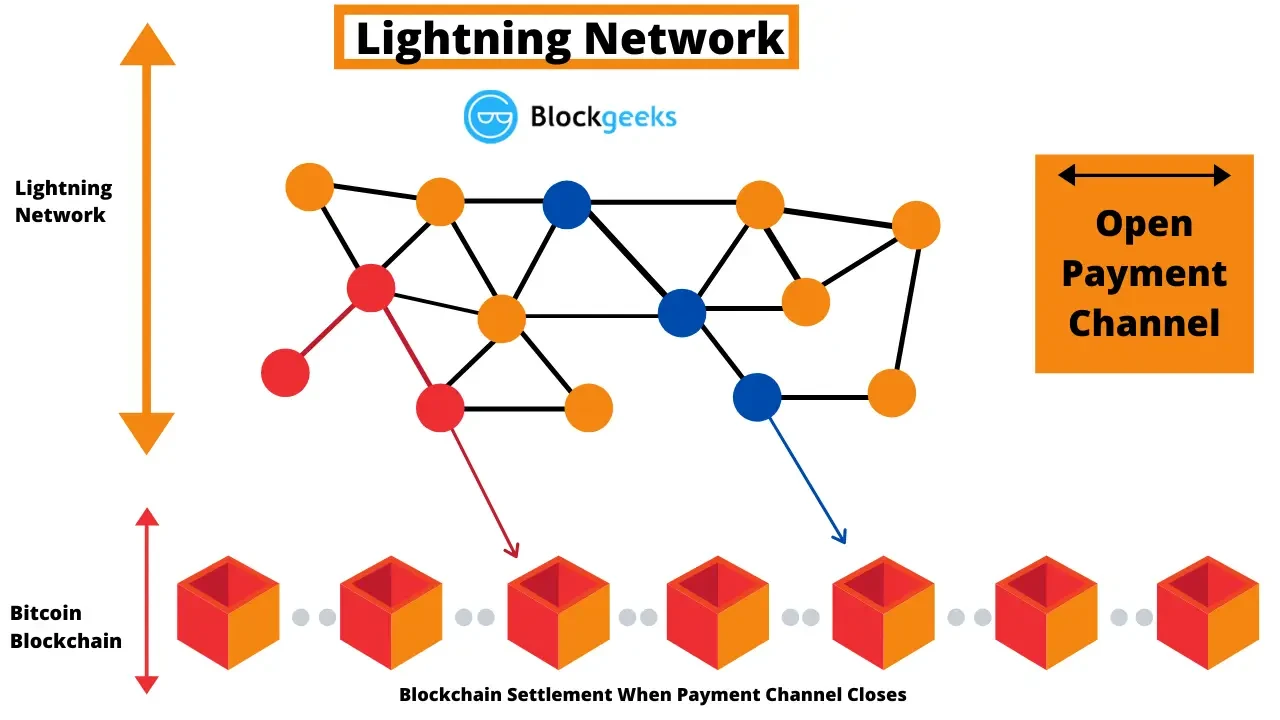
For Bitcoin, the most well-known L2 network is the Lightning Network. It's a complex system of payment channels where BTC are locked between two partners who may also have channels with other partners. The whole thing forms a mesh network.
Once the transactions are complete, the payment channel can be closed, and the final result of the exchanges (the balance of both partners) is recorded on the Bitcoin blockchain.
I won't go into detail because it's quite complicated. If you want to learn more, you can watch the videos by Fanis Michalakis, which perfectly explain how the Lightning Network works.
Click the image to enlarge.
The use and success of the Lightning Network are debated within the Bitcoin community. This Layer 2 network functions. It enables instant transactions, offering significant scalability to Bitcoin. However, some consider it experimental and question the Lightning Network's ability to scale as adoption increases.
For these proponents, the Lightning Network is a perfect complement to Bitcoin for everyday expenses and small amounts of money, while native Bitcoin network transactions would remain preferred for high-value exchanges. In any case, it still involves BTC.
Other Layer 2 solutions are being explored. It's a debate about whether to prioritize the evolution of the Bitcoin network and its protocol or rely on dedicated layers focused on performance. Everyone has their own opinion.
The quantum computer
I would also like to briefly mention the case of quantum computers. In theory, yes, this type of computer could compromise the cryptographic algorithms used to secure transactions on Bitcoin... just like transactions with your bank, your favorite e-commerce site, or any HTTPS exchange. What I mean is that most encryption mechanisms used today are potentially "breakable" by a quantum computer.
The power of a quantum computer is measured by its number of qubits. The most powerful models currently reach a few hundred qubits, for example, 105 for Google's (as of February 2025).
Millions of qubits would be needed to compromise Bitcoin (and the rest), which suggests that a serious quantum threat is unlikely to arrive for several decades.
This still leaves time to find solutions, knowing that there are already "Quantum Proof" algorithms. Some are working on their implementation, including for Bitcoin. As explained earlier, even though Bitcoin evolves slowly, it is not static, and while some fundamental aspects like the issuance of BTC have very little risk of being changed, the encryption algorithms could evolve to prepare the network for the advent of quantum computers.
Conclusion
I hope I have been able to outline the Bitcoin ecosystem by highlighting the main technological advancements associated with it.
The implementation of a consensus mechanism in a decentralized network has enabled the creation of a digital currency, demonstrating the ability to bring the concept of scarcity into the virtual world.
Bitcoin didn't just introduce a new asset class through the many other cryptocurrencies that followed; it paved the way for numerous innovations that combine the advantages of digital technology with real-world principles like ownership and value preservation.
As the network has grown, it has become increasingly difficult to compromise or attack, making it one of the most reliable and robust networks ever created. It is not perfect, and its adoption on a larger scale still requires improvements or strengthening in certain areas. Talented developers continue to work on this, either directly through its code or using other secondary networks.
A whole industry has been built around it. Whether we like it or not, it is now part of humanity's technological heritage, just like the internet.
I strongly encourage you to familiarize yourself with Bitcoin and explore its ecosystem. In the next article, I hope to provide some concrete solutions for participating in the Bitcoin adventure.